
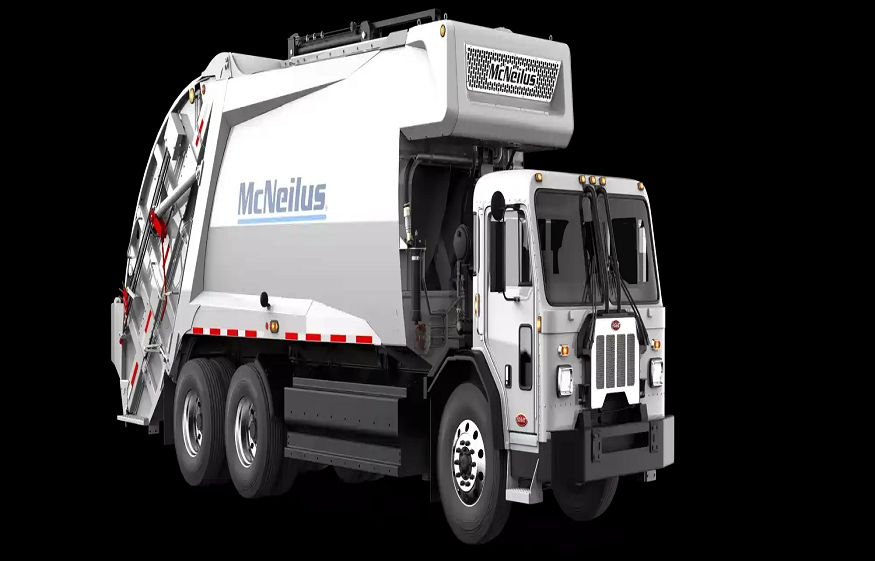
Buying a refuse collection truck is a major decision for municipalities, waste management companies, and private contractors. The vehicle must be suitable for the materials being collected, the routes it will serve, and the daily demands placed on drivers and maintenance teams. A truck that does not match the operation can create unnecessary expenses, reduce productivity, and require modifications or repairs sooner than expected.
McNeilus offers several rear loader configurations, each designed for different collection applications. Before purchasing, buyers should compare body capacity, compaction requirements, chassis compatibility, equipment options, maintenance needs, and supplier support. A careful evaluation can help identify a vehicle that provides practical value over its working life.
Define the Intended Application
The first step is understanding exactly how the truck will be used. Residential collection often involves frequent stops, household carts, and streets with varying access. Commercial routes may include larger containers and heavier refuse. Some recycling programs require separate compartments for different waste streams.
Buyers should document the type of material collected, average daily volume, container sizes, route length, number of stops, and unloading arrangements. These details help determine which rear loader configuration is appropriate.
A business should avoid choosing a truck based only on general specifications. The selected model should solve the operational challenges the company actually faces.
Compare Available Rear Loader Configurations
McNeilus rear loaders are available in standard, Heavy Duty, Extra Compaction, tag axle, and split-body configurations through Atlantic Heavy Duty.
The standard model is designed for residential and commercial collection routes. Heavy Duty configurations offer additional compaction capability, while Extra Compaction models are intended for more demanding commercial and demolition-related applications.
A tag axle option may be relevant when payload distribution and weight restrictions are important. Split-body configurations can support dual-stream collection where different materials need to remain separate.
Buyers should compare these models against the route requirements instead of assuming that the most specialized configuration is automatically the best choice.
Select the Right Body Capacity
Body capacity determines how much refuse the truck can hold by volume. Atlantic Heavy Duty lists standard McNeilus rear loader capacities of 17, 20, 25, 28, and 32 cubic yards.
Heavy Duty models are listed in 20-, 25-, 28-, and 32-cubic-yard capacities. Extra Compaction and tag axle models are available in selected sizes, while split-body configurations are listed in 25- and 32-cubic-yard options.
A larger body may be useful on routes with high collection volumes, but buyers must also consider payload. Dense waste can reach the legal weight limit before the body is full.
Reviewing actual route data can help determine a suitable capacity.
Evaluate Compaction Requirements
Compaction capability should match the materials being collected. Standard configurations may be sufficient for many residential and light commercial operations. Heavy Duty and Extra Compaction models are designed for more demanding applications.
Atlantic Heavy Duty describes its Extra Compaction model as suitable for commercial use and demolition stops. Its XXC package includes additional construction features, such as a thicker body floor and reinforced load edge.
Buyers should review the specifications for the exact model and confirm that it is suitable for their intended materials. They should also remember that compaction does not change the truck’s legal payload limits.
Check Chassis Compatibility
The chassis supports the refuse body, hydraulic equipment, and collected payload. It also influences maneuverability, vehicle weight, and operating performance.
Atlantic Heavy Duty lists chassis options from manufacturers such as Freightliner, Peterbilt, Kenworth, Mack, Autocar, Battle Motors, and International.
Before purchasing, verify gross vehicle weight rating, axle ratings, wheelbase, engine, transmission, cab arrangement, and applicable road requirements. The chassis must be suitable for the complete vehicle configuration.
Businesses should also consider whether local technicians can service the chassis and whether replacement parts are readily available.
Review the Hydraulic and Packing Systems
The hydraulic system powers the packing mechanism and other operating functions. Buyers should review the pump, cylinders, valves, hoses, reservoir, filters, and control arrangements.
Ask about recommended service intervals and the availability of qualified technicians. For a used vehicle, inspect the hydraulic system for leaks, damaged hoses, unusual noises, or inconsistent operation.
The packing mechanism should be checked for excessive wear and abnormal movement. Any concerns should be assessed by a qualified technician before purchase.
Inspect the Body and High-Wear Areas
The hopper, body floor, packing components, and tailgate are exposed to repeated contact with refuse. Buyers should examine these areas for corrosion, cracks, deformation, and previous repairs.
McNeilus specifications identify abrasion-resistant materials in selected high-wear areas, although details vary by configuration. Buyers should review the exact product specifications rather than assuming that all models use identical materials.
For used trucks, a physical inspection is particularly important. A qualified inspector can help identify structural issues or repairs that may affect future operating costs.
Consider Maintenance and Parts Availability
Maintenance is a significant part of refuse truck ownership. McNeilus highlights features intended to simplify certain service tasks, including fewer lubrication points and self-lubricating slide shoes on applicable configurations.
These features do not eliminate routine servicing. Hydraulic systems, electrical components, tires, brakes, safety equipment, and body wear areas still need regular attention.
Before buying, ask about parts availability, service locations, warranty coverage, and the recommended maintenance schedule.
Review Safety and Operator Requirements
Drivers and collection crews interact with the truck throughout each shift. Buyers should examine cab visibility, control layout, access, lighting, warning systems, mirrors, cameras if fitted, and rear operating controls.
The vehicle should be appropriate for the conditions of the route. Operators must receive training on the selected configuration and understand the safety procedures for loading, packing, reversing, and maintenance.
A truck should not be placed into service with malfunctioning safety equipment.
Compare Total Ownership Costs
The purchase price is only one part of the investment. Businesses should also estimate fuel, insurance, registration, financing, maintenance, repairs, tires, and potential downtime.
A lower-priced vehicle may require significant repairs or may not fit the intended application. A higher-priced configuration may provide little additional value if its features are unnecessary.
Comparing total ownership costs helps buyers make a decision based on long-term practicality rather than initial price alone.
Get Guidance From Atlantic Heavy Duty
Atlantic Heavy Duty provides information about McNeilus rear loader configurations and encourages buyers to discuss their requirements with a regional account manager.
Businesses evaluating a McNeilus rear loader should explain their collection routes, refuse types, container arrangements, expected payload, and service needs. This information can help narrow the available options.
Conclusion
Buying a McNeilus rear loader requires careful consideration of the intended application, body capacity, compaction requirements, chassis compatibility, hydraulic systems, body condition, maintenance, and safety.
By comparing these factors and reviewing the total cost of ownership, businesses can make a more informed purchasing decision. The right configuration should match the actual work, support reliable collection schedules, and remain practical to maintain throughout its service life.